Product
Why 'Which Was Scarier?' Beats a Typed Rating
Everyone's four stars and everyone's 7 out of 10 mean something different. A comparison between two films you have seen is consistent with yourself, and the list is the point
- The Gasper team
- 6 min read
On this page
Here is a small experiment. Think of a horror film you would give four stars, or a 7 out of 10. Now think about what that means. Is it very good? Better than most? Liked it, would not watch it again? Ask a friend the same question and compare. You will not agree on what the number means, and you probably do not agree with yourself from a year ago either. This post is the case for throwing the typed rating out and asking a different question.
Everyone's four stars means something different
A typed rating looks like a measurement and behaves like a mood. Two people watch The Babadook (2014). One gives it four stars because it got under their skin and they think about it still. The other gives it four stars because it was well made and they admired it from a distance. Same number, nearly opposite experiences. Swap the stars for a 1 to 10 and nothing changes except the size of the lie.
Worse, the scale is not even shared across one person's own history. Nobody rates on a fixed ruler. We rate against whatever we watched recently, against our mood, against what the review on the way in told us to expect. The 8 you gave a film in a good month and the 8 you gave another in a bad one are not the same 8. Averaging them produces a figure with the authority of a decimal and the meaning of a shrug.
Horror makes this worse than other genres, because scariness and quality are different things and a single typed rating has to smuggle both. Did you give The Blair Witch Project (1999) three stars because it was not that scary, or because it was scary and you did not like it? The number cannot say.
A comparison is consistent with yourself
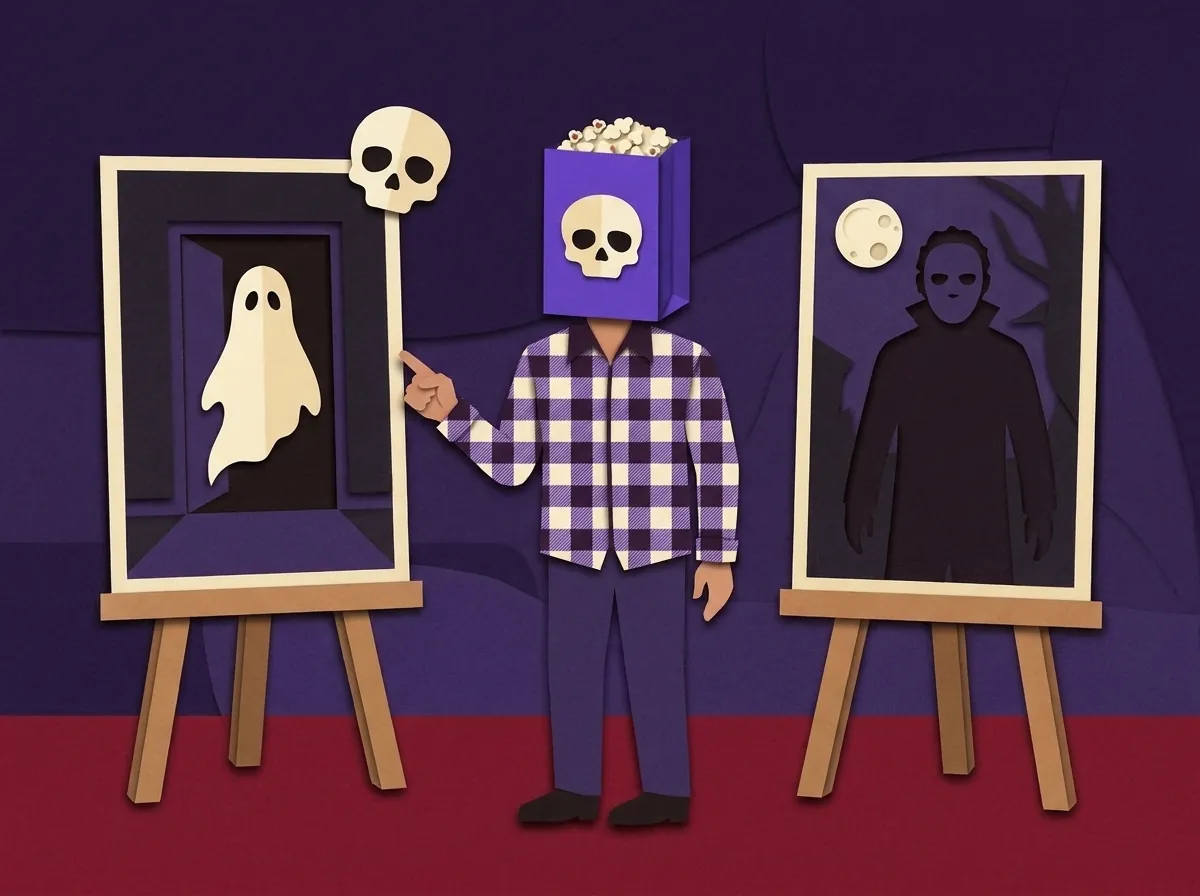
Now try a different question. Was The Babadook scarier than Hereditary (2018), for you? Most people answer in under a second, and the answer is the same next month. That is because a comparison is anchored to two specific experiences rather than to an imaginary scale. You do not have to decide what a 7 means. You only have to remember which one frightened you more.
This is what head-to-head ranking in Gasper is built on. You tap Rank, say how scary it was, Terrifying, Some scares, or Barely flinched, and then answer "Which was scarier?" against films you have already ranked. Each answer halves the remaining space, like a binary search, so even a long list takes a handful of questions. The film lands in an ordered list, and its scare score is read off the position.
The consistency is the payoff. Because every number comes from the same chain of comparisons, your 7.2 and your 7.4 differ for a reason: you said one was scarier than the other. Nothing on the list exists because of a mood on a Tuesday. If a mood on a Tuesday did sneak in, you re-rank the film and the mood is gone.
Comparisons are also honest in a way typed numbers are not. The FAQ puts it bluntly: everyone thinks they rate honestly, and everyone gives their favorite films five stars. It is very hard to inflate a comparison. You can tell yourself a film was a 9. It is harder to look at it beside The Exorcist (1973) and tap it.
The list is the point
A pile of typed ratings is not a list. It is a spreadsheet with a lot of ties in it. Sort by rating and you get twenty films at four stars, or at 7, in no particular order, which tells you almost nothing about which to recommend first.
An ordered list tells you everything. It is your scariest film at the top, your least scary at the bottom, and every film in between in the exact order you put it there. Scroll it and you learn things about yourself: that found footage gets you more than you admit, that the films you call the scariest were all watched alone, that the slasher you dismiss as fun sits higher than three prestige films you claim to prefer.
The list is also what makes comparison with other people interesting. Two rating averages can be compared only loosely. Two ordered lists can be laid side by side, and the places where they disagree are the start of every good argument about horror. That is what Scare Tolerance measures: where your scores and the crowd's part ways, and in which direction.
What about the films you loved?
Ask only about fear and you leave something out: the film that never scared you and that you have watched eleven times. Gasper does not solve that with a second typed rating, or a second ladder of comparisons about which film was better. It gives you a heart. Tap it and the film is marked as loved, separate from the score, with no number attached. A yes or no cannot drift the way a rating does, which is the whole reason it is a yes or no.
What you give up, and why it is worth it
You give up the number as an input. You cannot look at a film and decide it is an 8.5. You can only put it above and below other films, and let the 8.5 happen.
What you get back is an opinion that holds up. The early scores wobble, and the app says so: Gasper needs 5 ranked films before it shows numbers at all, because it scores each film by comparing it to the others. Rank a few dozen and the numbers settle into something you would defend. Rank a hundred and you have the most honest account of your own fear that exists anywhere.
A typed rating is a way of saying you watched it and felt a certain way. A ranked list is a way of saying what you felt, compared with everything else you have ever felt in a dark room. We think the second one is worth the extra taps.
Questions people ask
Can I still see a number for each film?
Yes. Every film gets a scare score from 0 to 10 with one decimal. You just do not type it; it comes from where the film sits in your ordered list.
What if I disagree with where a film landed?
Re-rank it. You answer a fresh set of head-to-heads and the film moves, and its score updates.
Does Gasper have star ratings at all?
No. There are no stars and no typed number anywhere in the app. The only number is the scare score, read from your head-to-heads, and the heart for films you loved is a yes or no, not a rating.
Mentioned in this post
- FeatureHead-to-head rankingAnswer which film was scarier a few times and Gasper places it in your rankings. You never type a number.
- FeatureScare scoreA measure out of 10 of how scary a film was for you, read from your own ranked list and shown in skulls.
- FeatureScare ToleranceYour scare scores against the community's on the same films, named plainly, with your fear stats beside it.
More from the blog
- ProductIntroducing Gasper: A Horror-Only App That Ranks by FearGasper is a free iOS app for logging horror films. Instead of typing a score, you answer which was scarier and build a personal ranked list with one honest number
- CommunityWhat Your Scare Tolerance Says, and What It Does NotScare Tolerance compares your scare scores with the community's on the same films and names where you land. Here is how to read it honestly, and its limits
Rank what scared you.
Free on the App Store. Log a film tonight, answer which was scarier, and watch your rankings take shape.