Jump scare: the sudden shock, and why it divides horror fans
Jump scarenoun
A jump scare is a sudden image or sound, usually after a quiet stretch, designed to make the audience physically flinch.
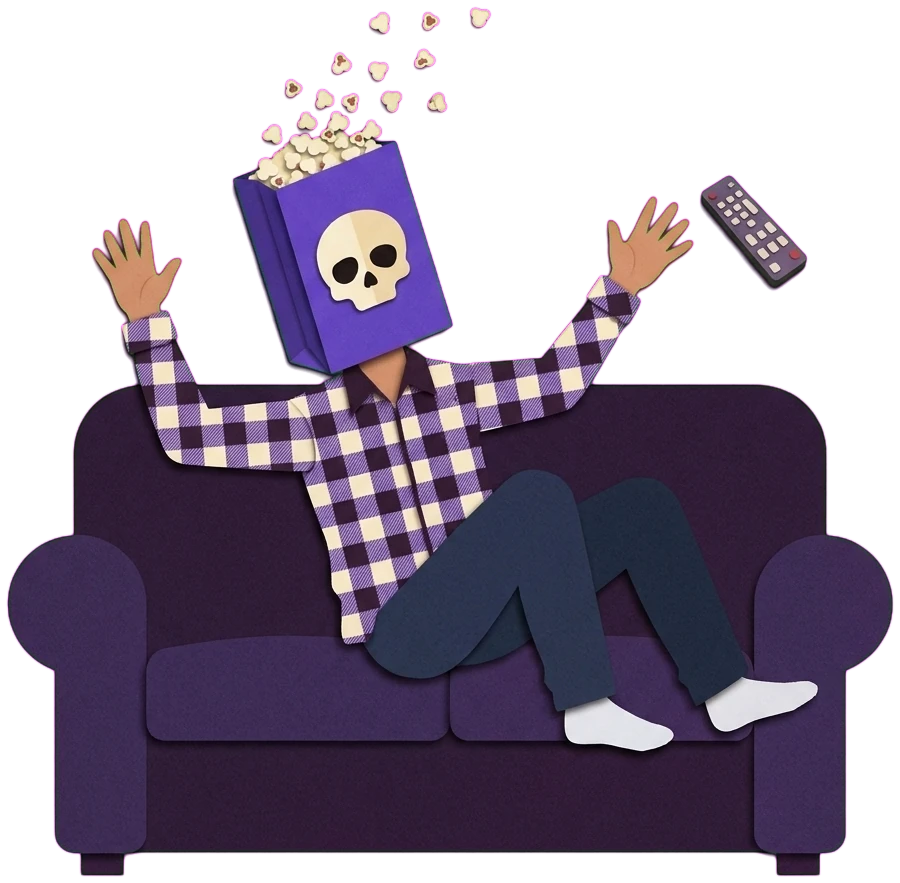
A jump scare is a sudden shock, a face in the mirror, a hand on the shoulder, a sound sting after silence, built to make you flinch before you have time to think. It is the most reliable tool in horror and the most argued over.
Where it comes from
The classic early example is the bus in Cat People (1942): a woman walks alone down a dark street, the tension climbs for a full minute, and then a city bus pulls up with a loud hiss of brakes. Nothing supernatural happens. The relief is the trick, and producers called that kind of shot a "bus" for years afterwards. The 1980s slashers made the jump scare a rhythm, and the 2000s remakes and the Conjuring era turned it into a precision instrument, often with a quiet stretch, a false alarm, and then the real one.
The modern complaint is about the sting: a loud chord on the soundtrack that makes any image frightening for a quarter of a second. It works on the body whether or not the film has earned it, which is exactly why fans distrust it.
Why it matters
Jump scares are the clearest line between kinds of horror fan. Some people pay for them. Some people feel cheated by them and want dread instead. Most people are somewhere in between and can tell a good one from a lazy one: a good jump scare is the release of a tension the film built honestly, and it is usually the thing you remember. The mirror in The Conjuring (2013) and the closing door in The Exorcist III (1990) are both set up for minutes.
In Gasper
Jump scares is a built-in tag you can add to any ranking. It is a note from a watcher, not a rating, and it does not move the scare score; only head-to-heads do. The tag matters because scary is not one thing: a film can run high on your scare list on jump scares alone, and someone with a low Scare Tolerance might want to know that before pressing play. Slow burn is the tag that usually marks the other approach, and a film can carry both.
Questions people ask
Are jump scares cheap?
A bad one is. A good one is set up for minutes and earned. The complaint is usually about films that use the sound sting without the setup.
What is the earliest famous jump scare?
The bus in Cat People (1942) is the one most historians point to: a long quiet walk, then a hiss of air brakes.
Can I avoid jump scares on Gasper?
Jump scares is a tag members add to rankings, so it is a signal from people who watched it, not a guarantee. Slow burn is the tag that tends to mark the opposite.
Go deeper
- FeatureScare scoreA measure out of 10 of how scary a film was for you, read from your own ranked list and shown in skulls.
- GuideGetting Into Horror If You Scare Easily: A Kind On-RampA gentle way into horror for people who scare easily: gateway films, watching with the lights on, which subgenres to start with and what Scare Tolerance will say
Related terms
- DreadDread is the sustained, building fear that something terrible is coming, the slow counterpart to the jump scare in horror.
- Practical effectsPractical effects are special effects made physically on set, with prosthetics, puppets, animatronics and blood rigs, rather than added digitally.
- Body horrorBody horror is horror in which the human body itself transforms, mutates, decays or betrays its owner, often in graphic detail.
- Cosmic horrorCosmic horror is horror built on the dread of forces vast and indifferent to humanity, whose true nature cannot be understood or survived.
Rank what scared you.
Free on the App Store. Log a film tonight, answer which was scarier, and watch your rankings take shape.