Teen Horror
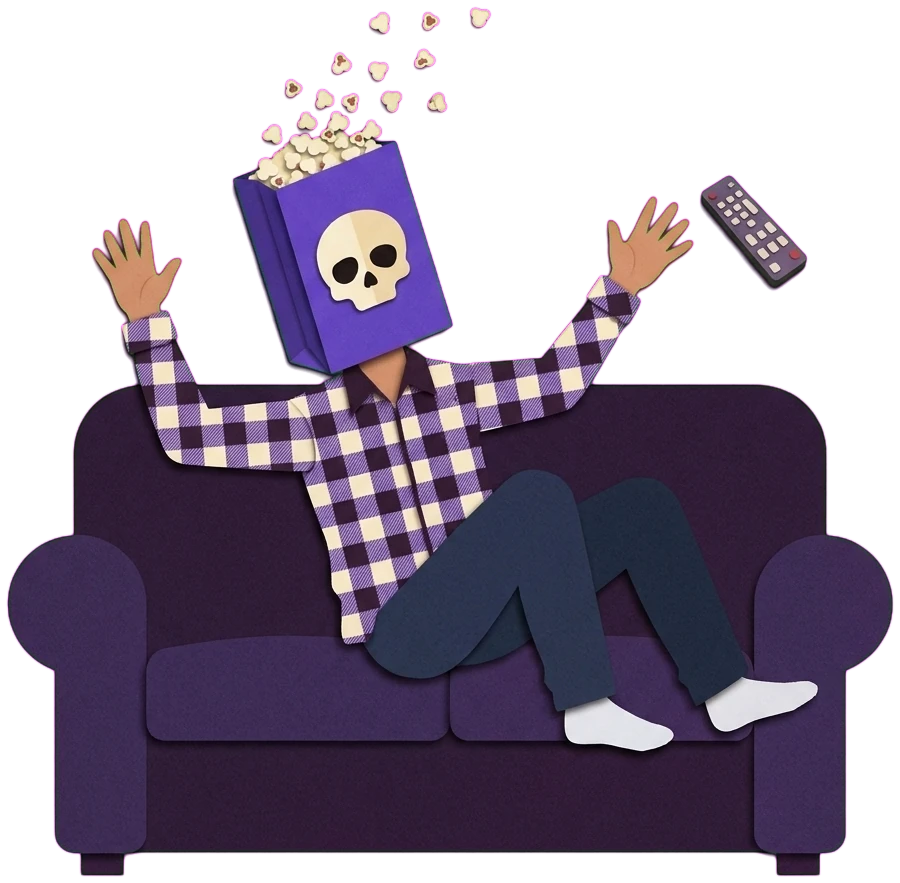
A young cast, a secret they share, and a killer or a curse that treats the end of adolescence as the end of everything.
Teen Horror5 to start
- 1Happy Death Day2017
- 2I Know What You Did Last Summer1997
- 3The Return of the Living Dead1985
- 4Jennifer's Body2009
- 5Final Destination2000
What defines it
- Era
- 1957 to today
- Mood
- adrenaline, nostalgia, fun
Teen horror is the genre's home crowd. Horror has sold tickets to teenagers since the drive-in, and it learned early that a cast of seventeen-year-olds gives a film everything it needs: a group with a secret, a first love, a body that is changing, and adults who will not listen until it is too late. The form is less a kind of monster than a kind of cast, and the monster is whatever the decade is afraid of.
The rules are about the cast. A group of friends, in high school or just out of it, usually at the end of something: a summer, a senior year, a birthday. A secret they share, or a rule they broke. A threat that arrives on the social calendar, at the party, the prom, the sleepover. Parents who are absent or useless. And a tone that can swing from a jolt to a joke to a kiss inside a single scene, because the film is about being young as much as it is about dying.
The lineage begins at the drive-in with I Was a Teenage Werewolf (1957), which put the words in the title. The slasher boom made teenagers the default victims, from Halloween (1978) through Friday the 13th (1980) and A Nightmare on Elm Street (1984), whose Elm Street kids are the form's first real ensemble. The Return of the Living Dead (1985) and The Lost Boys (1987) made it funny and gave it a soundtrack. Then Kevin Williamson rebuilt it twice in two years: Scream (1996) and I Know What You Did Last Summer (1997), with casts drawn from television and dialogue that knew the rules. The 2000s brought Final Destination (2000) and Jennifer's Body (2009), and the 2010s belonged to Blumhouse, with Happy Death Day (2017) and its loop, and then to Netflix's Fear Street trilogy (2021).
The signature techniques are social. The party scene where the camera finds the one person who is not having fun. The phone, landline or cell, as the way the threat gets in. The pop song over the kill. And the morning after, where the survivors have to go back to school.
- adrenaline
- nostalgia
- fun
Jolts with a safety net: teen horror scares fast and often, then lets you breathe with a joke, a crush or a song, so the next one lands clean.
- Axis
- Scare Score
- And
- Loved it
How it scares
This is the jump scare with a safety net. Teen horror scares fast and often, and then lets you breathe, with a joke or a crush or a song, so that the next jolt lands on nerves that have reset. The form rarely builds the slow dread of a ghost story, because its characters are too busy, and that busyness is the point. The fear is sharp, short and shared, the way it is at a sleepover.
The form gets to anyone who remembers being that age, and to anyone who is. It gets to viewers who like their horror with company, because teen horror is almost always a group film. It is less effective on people who need unbroken dread or a plausible threat; the kills are often jokes and the killer is often a costume. For most adults, the form is loved more than feared, and it tends to soften into a comfort watch somewhere in your twenties.
How to rank it in Gasper
You answer which was scarier a handful of times, and the film finds its place among everything you have ranked. Loved it? Heart it.
- 1
Teen horror is where the split between how scared you were and how much you loved it is widest. You answer "How scary was it?" with Terrifying, Some scares or Barely flinched, and then "Which was scarier?" against films you gave the same answer, in head-to-heads. Happy Death Day against a possession film is a loop against a violation; I Know What You Did Last Summer against a slasher you saw last year is a question about nostalgia, and the honest answer may surprise you.
- 2
Expect a lot of Some scares and Barely flinched on this page, and do not apologize for either. The first answer sets the band and the comparisons set the order inside it, so a teen film that never rattled you is only ever weighed against other films that never rattled you, and the Scare Score, 0 to 10 with one decimal, stays honest. A high score here is rare and worth noticing: if Final Destination's bus still lands as Terrifying, say so, and let it climb.
- 3
Then use the heart. "Loved this?" is a separate question from how scared you were, and teen horror is the natural home of a low score next to a heart: The Return of the Living Dead is a party, and pretending it frightened you does a disservice to the films that did. If a cheesy favorite is one you would rather keep off the feed, Stealth mode hides the rank and still counts it, and if you rank enough of these the Taste tab will name Teen Horror your Top subgenre without embarrassment.
- 4
In Discover, the Teen Horror shelf sits beside Slashers, and the Subgenre filter narrows any search to it. The Community Scare is the average of everyone who ranked a film, and on this page it tends to run modest, which makes your own high scores more interesting: if Jennifer's Body rattles you well above the crowd, you scare at something the marketing never mentioned.
Where to go next
Slashers are the nearest neighbor, and Scream, Halloween and A Nightmare on Elm Street belong to both pages. Comedy horror has claimed The Return of the Living Dead and Happy Death Day. Zombies share the Louisville cemetery. Splatter and gore is where Final Destination lives when the deaths become the point, and serial killers is where The Black Phone takes its kids when the threat is a person.
For deeper cuts, try The Faculty (1998), Robert Rodriguez and Kevin Williamson doing Invasion of the Body Snatchers in a Texas high school, with a cast that was about to be famous. Ginger Snaps (2000) is a Canadian werewolf film about two sisters and a first period, sharp and sad. And Freaky (2020), from the Happy Death Day team, swaps a serial killer and a teenage girl into each other's bodies and gets more out of the joke than it has any right to.
Questions about teen horror
- Partly audience, since teenagers have always been horror's biggest ticket buyers. Mostly structure: a group of friends with a secret, a first love, a body that is changing and a world that does not listen gives a horror film everything it needs before the killer arrives.
- They overlap heavily but are not the same. A slasher is defined by the killer; teen horror is defined by the cast. Scream is both. Jennifer's Body is teen horror with a demon, The Return of the Living Dead is teen horror with zombies, and Final Destination has no killer at all.
- It depends on when you met it. Teen horror is built to frighten the age it is about, and it tends to soften into comfort for everyone else. That is what the Scare Score and the heart are for: you can score I Know What You Did Last Summer honestly and still love it.
- Happy Death Day. The scares are real but short, the loop gives you control, and the lead is good company. The Return of the Living Dead is the next step, and a laugh the whole way.
Why is so much horror about teenagers?
Partly audience, since teenagers have always been horror's biggest ticket buyers. Mostly structure: a group of friends with a secret, a first love, a body that is changing and a world that does not listen gives a horror film everything it needs before the killer arrives.
Subgenres like this one
- SubgenreSlashersA masked or hidden killer works through a cast one at a time until someone turns and fights back.
- SubgenreComedy HorrorHorror that lets you laugh, from the splatter farce to the vampire sitcom, without always letting you off the hook.
- SubgenreZombiesThe dead come in numbers, and the real horror is what the living do to each other while they wait.
Keep reading
- FeatureHead-to-head rankingAnswer which film was scarier a few times and Gasper places it in your rankings. You never type a number.
- FeatureScare scoreA measure out of 10 of how scary a film was for you, read from your own ranked list and shown in skulls.
- GlossaryJump scareA jump scare is a sudden image or sound, usually after a quiet stretch, designed to make the audience physically flinch.
- GlossaryDreadDread is the sustained, building fear that something terrible is coming, the slow counterpart to the jump scare in horror.
- GlossaryStealth modeStealth mode is Gasper's per-rank switch that hides that activity from the feed while the film stays in your rankings with its scare score.
Rank your teen horror list.
Free on the App Store. Log a film tonight, answer which was scarier, and watch your rankings take shape.